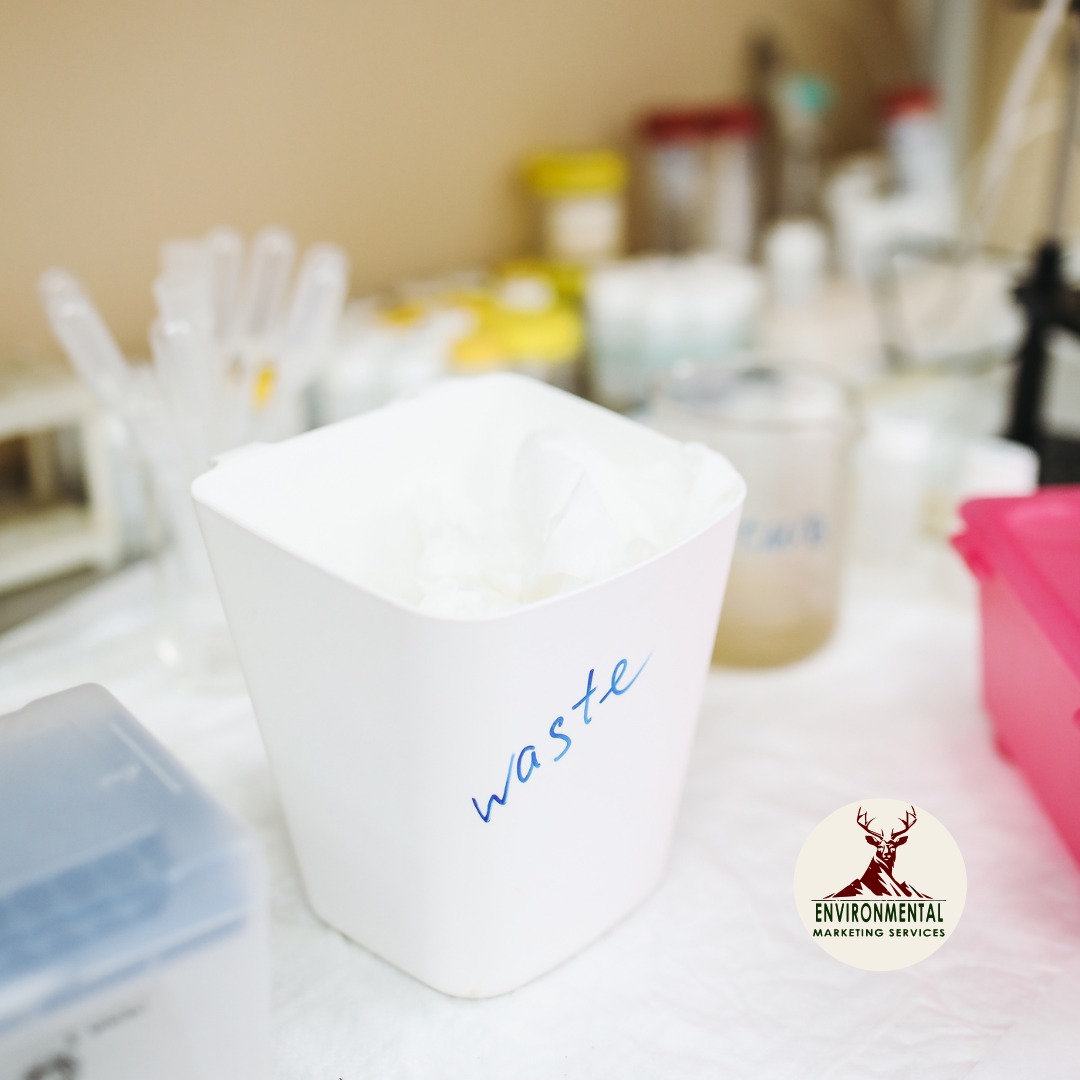
Building a Safety-First Mindset in the Laboratory
Proper chemical waste disposal is one of the most important parts of running a safe, compliant laboratory. Every bottle of spent solvent, each used pipette tip, and every contaminated wipe has the potential to affect people in the lab, the surrounding community, and the environment if it is not handled correctly. When disposal is an afterthought, risk grows quickly.
Improper disposal can lead to fires, toxic exposures, and dangerous reactions when incompatible chemicals mix. It can result in contamination of drains, soil, and groundwater, and it can also bring significant regulatory penalties and cleanup costs. Safe disposal does not start when a drum leaves your dock; it starts at the bench every time a lab worker decides where a waste item should go.
At Environmental Marketing Services, LLC, based in Seneca, South Carolina, we help commercial and institutional generators across most of the United States manage hazardous, non-hazardous, and chemical wastes from pickup through final disposal or recycling. When laboratories pair good daily habits with professional waste management support, they protect their people and the environment while keeping operations moving smoothly.
Understanding Your Laboratory’s Chemical Waste Streams
In a laboratory, chemical waste is more than obvious liquid reagents. It includes spent solvents from extractions and chromatography, expired or unused reagents, acids and bases from titrations or cleaning, contaminated personal protective equipment, and sharps that carry chemical residues. Even cleaning solutions used on benches, hoods, or equipment can qualify as chemical waste depending on what they contain.
A key step is understanding the difference between hazardous and non-hazardous waste. Many hazardous wastes have one or more of these characteristics: ignitability, corrosivity, reactivity, or toxicity. A flammable solvent, a highly acidic solution, a reactive metal, or a compound with toxic heavy metals can all fall into the hazardous category. Non-hazardous wastes are still managed carefully, but they generally have fewer handling and disposal restrictions.
Some materials fall into special categories. Universal waste often includes items like fluorescent lamps, certain batteries, and some electronics that contain hazardous components but are subject to streamlined rules. Many labs also generate mixed wastes that contain both chemical and biological or radioactive components, which require more specialized handling and disposal pathways.
To keep all of this under control, laboratories benefit from a thorough waste inventory and classification process. Identifying what you generate, how much, and how often helps make sure every material follows the right chemical waste disposal route. Professional waste vendors can assist with profiling, categorizing, and documenting each waste stream so that your internal procedures line up with regulatory expectations.
Containerization, Labeling, and Segregation Done Right
Once you understand your waste streams, the next step is managing containers correctly. Containers should always be made of materials compatible with the waste inside, with closures that seal completely. Acidic waste, for example, belongs in suitable plastic or glass, not metal. Leave some headspace in liquid containers to allow for expansion, especially if temperature changes are possible. Reusing consumer containers, like old drink bottles, is risky because they may not be chemically compatible or strong enough for lab waste.
Labels are just as important as the containers themselves. Good labeling practices usually include:
- Full chemical names, not only abbreviations or formulas
- Approximate concentrations or ranges
- Hazard warnings or pictograms when available
- The accumulation start date
- The responsible lab or contact information
Clear labels reduce confusion, help waste handlers stay safe, and prevent the creation of unknowns that require expensive analytical work before disposal.
Segregation rules keep waste from reacting unexpectedly. Common best practices include:
- Keeping acids separate from bases
- Isolating oxidizers from organics and combustibles
- Separating halogenated from non-halogenated solvents
- Never mixing incompatible wastes just to reduce container counts
When containers are well chosen, accurately labeled, and properly segregated, chemical waste disposal is faster, safer, and usually less expensive, because each stream can follow an appropriate and efficient treatment route.
Safe Handling, Storage, and On-Site Accumulation
Safe waste handling is a daily habit, not a once-a-year training topic. Lab staff should always wear appropriate PPE such as gloves, safety glasses or goggles, and lab coats, adding face shields or respiratory protection when procedures call for it. Waste containers should be kept in secondary containment trays or tubs to catch leaks, and moved through hallways on carts rather than carried by hand.
Satellite accumulation areas work best when they are close to the point of generation but set up with care. Clear signage, standard operating procedures, and quick reference charts help people know what goes where. Spill kits matched to the types of chemicals in use, along with simple written steps for emergency response, keep staff prepared for unexpected events.
Storage conditions should support safety and compliance. That often means:
- Adequate ventilation to avoid vapor buildup
- Temperature control to prevent pressure increases and decomposition
- Physical separation of incompatible materials
- Shelving and storage that prevent tipping or breakage
- Clear aisles and access for emergency responders
Hazardous waste rules typically place limits on how much waste can be accumulated on-site and for how long, based on your generator status. Working with a qualified waste management company helps laboratories plan routine pickups so these limits are not exceeded, and so waste does not sit longer than it should in work areas or storage rooms.
Partnering with a Professional Waste Management Provider
A specialized waste management partner can take much of the technical and logistical burden off the laboratory. At Environmental Marketing Services, we support laboratories with profiling waste streams, selecting appropriate containers, arranging compliant transportation, and managing treatment, disposal, or recycling options where they are available.
Using permitted transporters and disposal facilities is an important part of cradle-to-grave responsibility. Proper manifesting and documentation help show that waste was identified, packaged, shipped, and handled correctly all the way through final disposition. This recordkeeping often makes a big difference during inspections or internal audits.
Many labs also benefit from value-added services like lab pack projects to safely consolidate small containers and legacy chemicals, scheduled cleanouts of storage rooms, and training sessions that keep staff current on good waste practices. Guidance on waste minimization strategies, recycling opportunities, and smarter purchasing can reduce the volume and variety of waste generated in the first place.
For organizations that operate in multiple states, keeping track of differing rules can be challenging. Partnering with a company that provides services across much of the country helps align practices site to site, so that safety and compliance standards stay consistent even when regulations vary.
Turning Best Practices Into Everyday Lab Habits
Good chemical waste disposal is most effective when it is built into the way your lab already works. Formalizing expectations in a written chemical hygiene and waste management plan gives everyone a shared reference. Including chemical waste disposal training in new employee onboarding and regular refreshers helps turn those expectations into daily habits.
Small tools can make a big difference. Standardized labels reduce guesswork. Simple posters near waste stations can remind staff about segregation rules and what belongs in each container. Quick reference charts for common incompatibilities help people pause before pouring wastes together. Regular internal walkthroughs or audits keep minor issues from turning into bigger problems.
By understanding your waste streams, using solid container and labeling practices, handling and storing waste safely, and working with experienced waste professionals, laboratories can protect their teams and the environment while staying compliant and efficient. When everyone in the lab sees chemical waste disposal as part of their job, safety becomes part of the culture, not just a checklist.
Get Started With Your Project Today
If you are ready to handle hazardous materials safely and stay compliant, our team at Environmental Marketing Services is prepared to help with reliable chemical waste disposal solutions tailored to your operation. We work closely with your staff to assess your waste streams, recommend the safest options, and manage transportation and disposal with minimal disruption. Reach out today so we can review your needs, answer questions, and provide a clear plan. To talk with our team directly, simply contact us.