Protecting People and the Planet From Mercury Hazards
Mercury is a silver-colored metal that stays liquid at room temperature, and it shows up in more places than many facilities realize. Industrial, laboratory, healthcare, and commercial sites may have mercury in thermometers and manometers, switches and relays, fluorescent and HID lamps, lab reagents, dental amalgam, batteries, and older equipment that has never been replaced. Even if your team rarely sees free-flowing mercury, it may still be present inside devices and universal waste streams.
Mercury is dangerous because it is highly toxic, especially as a vapor. When spilled or mishandled, it can slowly evaporate, creating an invisible inhalation risk for workers and visitors. In the environment, mercury persists, settles into soil and water, and can transform into methylmercury, which builds up through the food chain. That is why mercury control is both a safety issue and an environmental responsibility.
Effective mercury management should never stand alone. It needs to fit into your broader chemical waste disposal strategy and regulatory compliance effort. From our base in Seneca, South Carolina, we at Environmental Marketing Services, LLC help facilities across the country with transportation and disposal of hazardous, non-hazardous, and universal waste, including mercury-containing materials, in a compliant and cost-effective way.
Understanding Mercury Risks in Your Facility
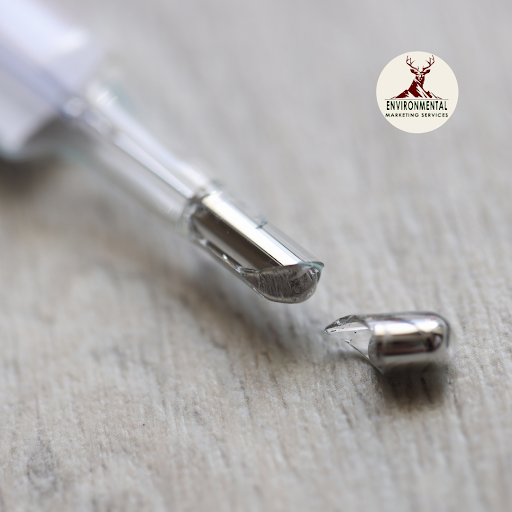
Most facilities encounter mercury in a few recognizable forms. Elemental mercury is the shiny liquid metal that might be released from broken thermometers, manometers, or process instruments. Mercury-containing devices include thermostats, switches, relays, pressure gauges, and some older electrical equipment. Mercury compounds show up in certain lab chemicals and specialty products. Universal waste, such as fluorescent lamps and some batteries, also often contain mercury and demand careful handling.
Health risks depend on how and how long people are exposed. Acute exposure can occur when a device breaks and mercury beads spread over the floor, especially in a poorly ventilated area. Chronic exposure comes from low-level vapor in a space where mercury was spilled and not fully cleaned up, or where devices slowly leak over time. Workers who are pregnant, planning pregnancy, or who perform regular lab, dental, maintenance, or equipment repair work are especially vulnerable.
Common exposure pathways include inhalation of mercury vapors from spills, skin contact with contaminated surfaces, and handling broken lamps or devices without protection. The environmental risks are just as serious. Mercury can wash into storm drains, enter surface water and groundwater, and settle in sediments. Microorganisms can convert it into methylmercury, which accumulates in fish and wildlife, and ultimately affects human communities that depend on those resources.
Treating mercury as an isolated problem almost always leads to blind spots. Building it into your overall chemical waste disposal program supports safer operations, better environmental stewardship, and stronger compliance with federal and state rules.
Safe Handling Practices for Mercury and Mercury Waste
Safe handling starts with good work practices. Whenever possible, mercury-related work should be done in designated areas with hard, nonporous surfaces that are easy to clean. These spaces should have adequate ventilation to prevent vapor buildup. When working with devices that may contain mercury, place them over trays or secondary containment so that any breakage is captured.
Personal protective equipment is another key control. Depending on the task, this may include:
- Chemical-resistant gloves suitable for mercury work
- Safety glasses or face shields to protect eyes
- Lab coats or coveralls dedicated to the work area
- Shoe covers if there is a risk of floor contamination
Training should cover how to put on and remove PPE without spreading contamination. Gloves and other disposable gear should be treated as contaminated waste once used around mercury.
There are also clear do-not rules that everyone should understand:
- Do not use household or standard shop vacuums on mercury spills
- Do not sweep mercury with a broom or brush
- Do not pour mercury or mercury waste down drains or sinks
- Do not mix mercury waste with regular trash or other waste streams
Training is essential, not only for lab staff. Maintenance teams, custodial staff, healthcare providers, dental personnel, and anyone who changes lamps, handles equipment, or manages waste should be trained on mercury hazards, emergency response, and reporting. Mercury procedures should connect directly to your broader safety and chemical waste disposal training, so that workers see it as part of one consistent system.
Best Practices for Mercury Storage Before Disposal
Once mercury-containing items are identified, they need to be segregated. Intact devices, such as working thermostats or fluorescent lamps, should be separated from broken items and spill debris. Elemental mercury collected from spills belongs in its own compatible container. Lab chemicals that contain mercury need to stay in their original containers if possible, or be transferred carefully into compatible alternatives. Universal waste lamps and batteries should be stored separately from other hazardous waste.
Storage containers should be:
- Compatible with mercury or the specific waste type
- Rigid, sealable, and kept tightly closed when not in active use
- Placed in secondary containment, such as trays or tubs, to capture leaks
- Clearly labeled with contents and appropriate hazard warnings
Where regulations apply, you may also need to record an accumulation start date on the container. This helps track how long waste has been stored and supports compliance with time limits.
Storage areas should have controlled access to prevent unauthorized handling, along with clear signage that identifies the space as a hazardous or universal waste area. They should be protected from physical damage, such as impacts from vehicles or carts, and from extreme temperatures that could damage containers or devices. Good lighting and organization reduce the risk of accidental disturbance.
Accurate records reinforce good practice. Keep inventories of mercury-containing materials, track volumes and types of waste, and document shipments sent off-site. These records make inspections smoother, support reporting, and help you forecast chemical waste disposal needs so you can plan pickups efficiently.
Compliant Mercury Disposal and Spill Response Steps
Mercury and mercury-containing waste should never go into regular trash or down the drain. Mercury is generally regulated as hazardous waste under federal law, and many mercury-containing products fall under universal waste rules. Some states add extra requirements or restrict certain items even further, so it is important to understand the rules that apply where your facility operates.
A compliant disposal process typically includes:
- Characterizing the waste to determine which regulations apply
- Choosing appropriate containers and packaging methods
- Labeling containers clearly and accurately
- Respecting accumulation time limits and storage standards
- Arranging transport with a licensed hazardous waste transporter, such as Environmental Marketing Services, LLC, so waste goes to an appropriate treatment or disposal facility
Spills require calm, structured response. For small spills of elemental mercury, isolate the area and keep people from walking through it. Evacuate nonessential personnel. If safe to do so, increase ventilation to the outside. Use a mercury-specific spill kit or mercury-absorbing materials, following the instructions carefully. Collect beads of mercury, contaminated tools, PPE, and cleanup material into compatible containers, then label and store them with your other mercury waste for proper disposal.
Professional help is necessary for larger spills, uncertain contamination spread, or spills in sensitive locations such as healthcare facilities, laboratories, schools, or food processing areas. In these situations, specialized responders can assess the area, measure vapor levels, manage decontamination, and coordinate packaging, transportation, and disposal. Integrating this type of response into your overall chemical waste disposal program strengthens both safety and compliance.
Partnering with EMS for Safer Mercury Management
Working with a specialized provider for mercury and other hazardous waste reduces risk at every stage. At Environmental Marketing Services, LLC, we stay current on regulatory expectations and best practices so our clients do not have to track every rule change on their own. We focus on proper packaging, secure transportation, and appropriate final disposal or treatment, so mercury is handled safely from your loading dock to its end destination.
From our base in Seneca, South Carolina, we support industrial, laboratory, healthcare, and commercial clients across the country with transportation and disposal of hazardous, non-hazardous, and universal waste. Mercury-containing materials are one part of that larger service mix, which means we can help you align mercury controls with your broader chemical waste disposal strategy.
A safer facility starts with clear awareness. Conducting an internal inventory of mercury and other hazardous materials, updating handling and storage procedures, and planning for both routine disposal and unexpected spills can make your workplace safer for people and less harmful to the environment. Thoughtful mercury management, supported by knowledgeable partners, protects your team, your community, and the ecosystems that all of us depend on.
Get Started With Reliable Chemical Waste Disposal Today
Protect your facility, your employees, and the environment by partnering with Environmental Marketing Services for compliant chemical waste disposal solutions tailored to your operations. We handle the details so you can focus on running your business, confident that your hazardous materials are managed safely and in full regulatory compliance. To discuss your specific needs or request a customized quote, contact us and we will help you put a safe, efficient disposal plan in place.