Protecting People and the Planet with Smarter Waste Choices
Safe chemical waste disposal is not just a regulatory box to check; it is a direct investment in the safety of your employees, your community, and the environment. When hazardous materials are handled the wrong way, they can cause injuries, contaminate soil and water, and attract serious regulatory attention. When they are handled the right way, they support a safer workplace, a cleaner environment, and a stronger reputation with customers and regulators.
Hazardous chemical waste generally includes any discarded chemical that is ignitable, corrosive, reactive, or toxic. This is different from non-hazardous waste, which does not pose the same immediate risk, and universal waste, such as certain batteries and lamps, that follows simplified rules. Understanding which waste falls into which category is the first step to handling it correctly.
At Environmental Marketing Services, we focus on compliant, environmentally responsible, and cost-effective chemical waste disposal and recycling across much of the United States. From our base in Seneca, South Carolina, we help businesses in many industries turn complex waste streams into clear, manageable programs.
Understanding What Counts as Hazardous Chemical Waste
Many facilities are surprised by how many common materials qualify as hazardous chemical waste. Manufacturing plants deal with spent solvents, cleaning chemicals, acids, caustics, paints, and coatings. Healthcare facilities generate pharmaceutical waste, disinfectants, laboratory reagents, and chemical sterilants. Laboratories work with a wide variety of reagents, standards, and experimental byproducts that can be ignitable or toxic. Automotive and commercial operations manage used solvents, parts washer waste, paints, thinners, and various maintenance chemicals.
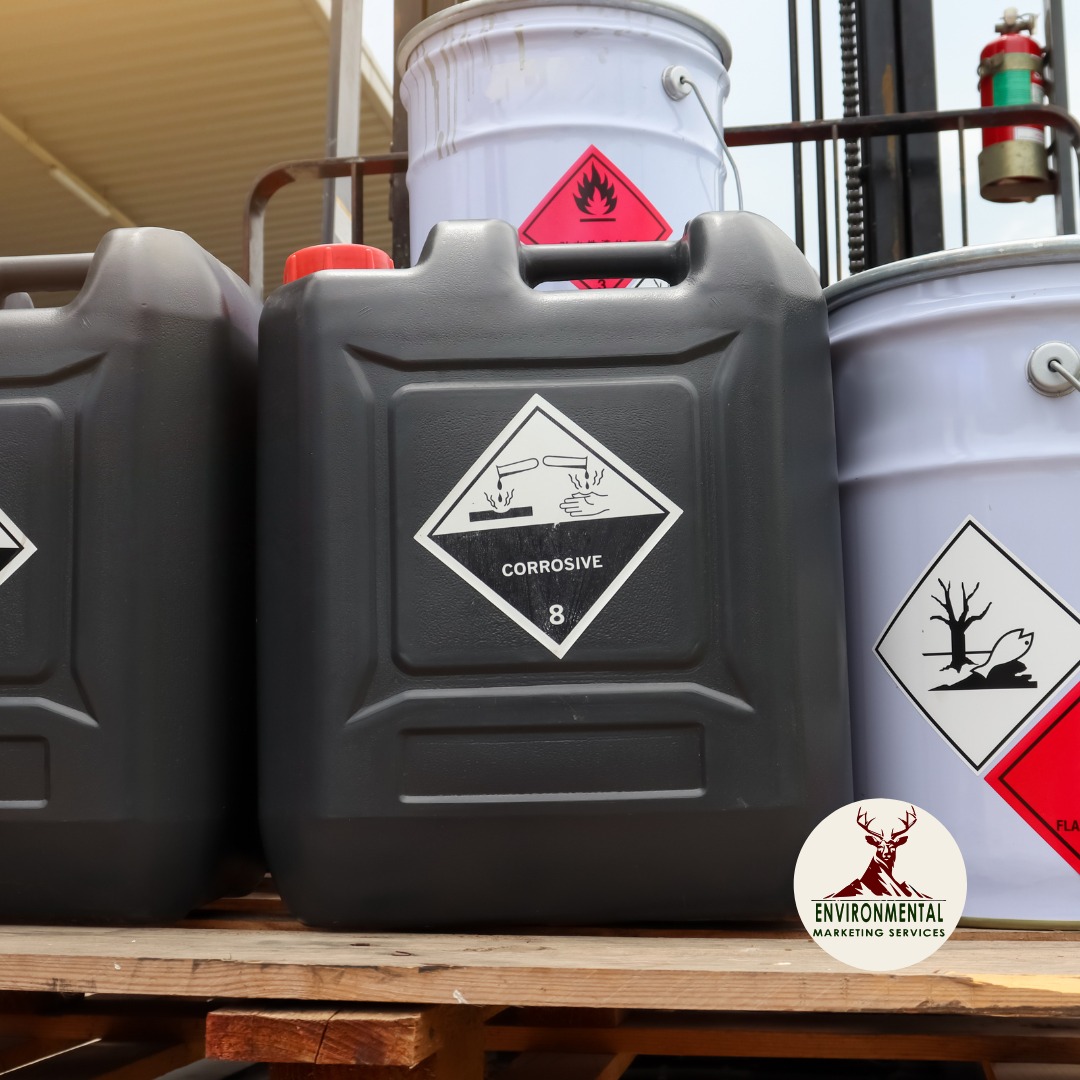
Regulators often classify hazardous waste using four characteristics: corrosive, ignitable, reactive, and toxic. Corrosive wastes include strong acids or bases that can burn skin or corrode metal. Ignitable wastes catch fire easily, such as many solvents or alcohol-based solutions. Reactive wastes are unstable, potentially releasing gases, heat, or causing explosions when mixed with water or other materials. Toxic wastes contain substances that are harmful if inhaled, ingested, or absorbed, even at low concentrations.
Accurate identification is the foundation of safe chemical waste disposal. That means knowing exactly what each waste stream contains, labeling it clearly, and ensuring incompatible materials are never stored together. Segregation is just as important as identification. Keeping acids away from bases, oxidizers away from organics, and flammables away from ignition sources reduces the risk of dangerous reactions. When classification, labeling, and segregation are solid, every other part of your program becomes safer and more efficient.
Compliance Basics Regulations Every Facility Must Know
In the United States, hazardous waste management is led by the Environmental Protection Agency (EPA), which sets national rules for identifying, storing, and disposing of hazardous waste. The Department of Transportation (DOT) regulates how hazardous materials are packaged, labeled, and transported on public roads. Many state agencies add their own requirements, which can be stricter than the federal rules, so facilities must pay attention to both levels of regulation.
Your generator status is a key part of compliance. Facilities are grouped as very small, small, or large quantity generators, depending on how much hazardous waste they produce in a given period. This status affects how long you can store waste on site, how much you can accumulate, which records you must keep, and what type of training and reporting is required. A change in production or new processes can shift your generator category, so it is important to review your status regularly.
The consequences of non-compliance can be serious. Facilities can face fines, forced shutdowns of operations, and long-term damage to community relationships if waste is mismanaged. Working with an experienced waste management provider helps reduce those risks. A knowledgeable partner can clarify which rules apply, help you keep accurate records, and design processes that hold up under regulatory scrutiny.
Best Practices for Safe Handling, Storage, and Transport
Every safe program starts with the right containers. Chemical waste needs compatible containers that will not react with the contents or break down over time. Containers must be kept closed when not in use, clearly labeled with the contents and hazards, and stored in areas designed to catch leaks and spills. Secondary containment, such as spill pallets or berms, adds an extra layer of protection between the waste and the floor or soil.
Well-designed storage areas reduce risk even further. That includes good ventilation, clear separation of incompatible materials, and easy access to spill response supplies. Many facilities find it helpful to set up designated accumulation areas with:
- Clearly marked signage
- Organized shelving or pallet systems
- Spill kits and absorbents
- Fire extinguishers and emergency equipment
Day-to-day handling is where most incidents can occur, so strong procedures matter. Staff should have appropriate personal protective equipment (PPE) for the chemicals they handle, such as gloves, goggles, and protective clothing. Everyone who works with hazardous waste should know how to respond to a spill, how to use emergency showers and eyewash stations, and when to escalate a situation to supervisors or safety teams. Regular training keeps these skills fresh and aligned with current regulations.
Transport and final disposal are the last links in the chain. Professional transporters follow DOT rules for packaging, labeling, and shipping documentation. Manifests track hazardous waste from your facility to the permitted treatment, storage, or disposal facility, creating a cradle-to-grave record. At Environmental Marketing Services, we coordinate this process so waste moves safely, is documented properly, and ends up at appropriate treatment and disposal locations.
Choosing Sustainable and Cost-Effective Disposal Options
Many businesses want to minimize their environmental impact while also controlling costs. That starts with choosing disposal options that are safer for the environment when possible. Depending on the waste type, options can include recycling, fuel blending, or treatment methods that reduce volume and toxicity before final disposal. These approaches reduce reliance on landfills and can align well with corporate sustainability goals.
Cost control often comes from smarter waste management, not just lower unit prices. When wastes are segregated correctly, you avoid mixing higher cost hazardous waste with lower cost streams. Efficient scheduling of pickups can reduce transportation expenses, especially for multi-site businesses that coordinate shipments. Some facilities benefit from consolidating compatible wastes into fewer, well-managed streams instead of handling many small, fragmented ones.
We work with facilities to design programs that balance compliance, sustainability, and budget. For some, the priority is minimizing hazardous classifications where legitimate and safe. For others, it is maximizing recycling and recovery. By understanding your operations, we can recommend strategies that keep your chemical waste disposal program aligned with your business goals.
Partnering with Experts to Strengthen Your Waste Program
Every facility benefits from a clear-eyed look at its current hazardous waste practices. That review should cover how wastes are identified, labeled, and stored, as well as how manifests, training records, and inspection logs are maintained. Gaps in any of these areas can be addressed before they become regulatory issues or safety incidents.
A nationwide provider like Environmental Marketing Services can support that process through site assessments and ongoing program management. We help businesses clarify what they generate, streamline chemical waste disposal steps, and keep documentation organized and accessible. With consistent support, it becomes easier to keep people safe, protect the environment, and maintain confidence that your operation is handling chemical waste the right way from start to finish.
Get Started With Your Project Today
If you are ready to handle hazardous materials safely and stay compliant, our team at Environmental Marketing Services is here to help. Learn how our specialized chemical waste disposal solutions can be tailored to your facility’s specific needs. Reach out to us today to discuss your waste streams, scheduling, and reporting requirements, or use our contact form to request a consultation.